How do solar streetlights work?
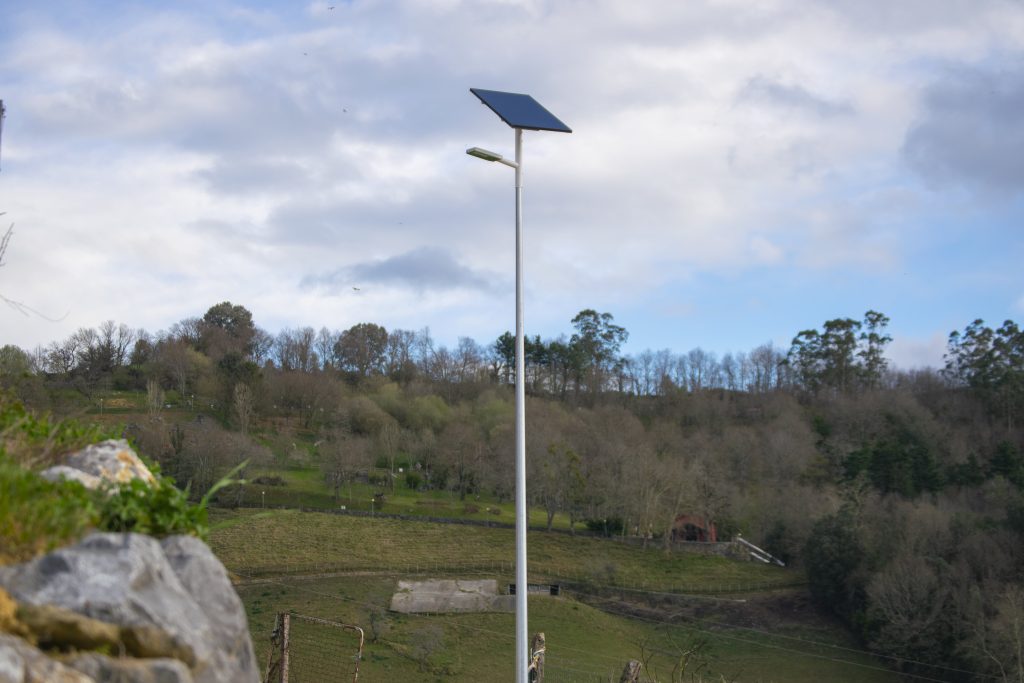
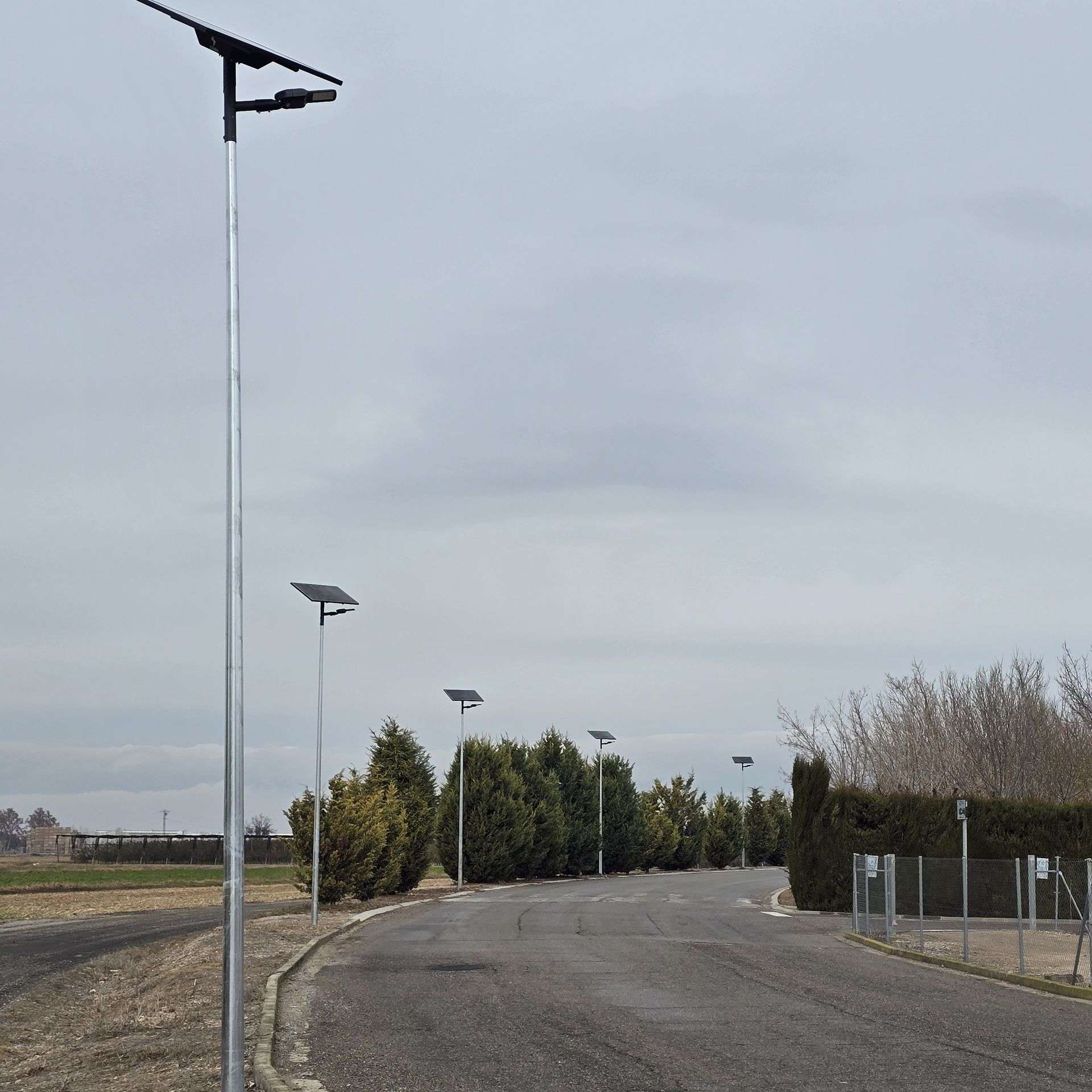
The lighting process begins with the collection of sunlight by the panel, which is converted into electrical energy and stored in the battery.
This system is designed to intelligently regulate energy use, ensuring that, even on days with low solar gain, the streetlights can operate efficiently.
At dusk, when the panel no longer picks up light, the luminaire knows it is night and turns on the LEDs.
Benefits compared to conventional lighting
Solar street lights are a innovative lighting solution with multiple benefits compared to conventional lighting:
- Sustainability
- Costs Redction
- Autonomy
- Acces to Remote Areas
- Fast and economic instalaiton
- Light Pollution Reduction
1.Sustainability
Solar street lights use solar energy, a completely clean and renewable source. This means that, unlike conventional lighting that often relies on electricity generated from fossil fuels, solar lighting does not deplete non-renewable natural resources.
Also, this reduced reliance on polluting energies significantly reduces the carbon footprint of public lighting.
2.Costs Reduction
One of the most attractive benefits of solar street lights is the considerable decrease in both electricity and maintenance costs.
As they are an autonomous solution, solar street lights eliminate electricity consumption costs and, thanks to the durability and low maintenance requirements of components such as LEDs and long-life panels, operating costs are drastically reduced as well.
The instalation of this solutions is also cheaper, we will go into details later.
3.Acces to Remote Areas
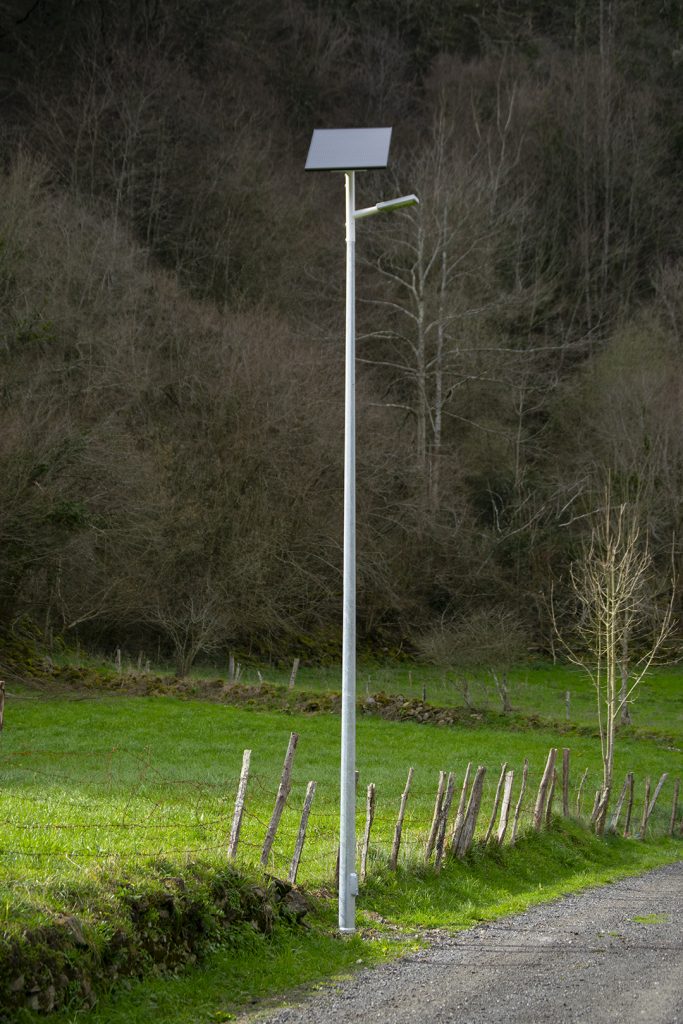
A key benefit of solar streetlights is their ability to be installed in locations that lack access to the power grid.
This makes them ideal for illuminating rural areas, remote roads and regions where electrical infrastructure is non-existent or difficult to implement.
Solar energy brings light to these places, improving the safety and life quality of their inhabitants.
4. Fast and Economic Instalation
The installation of solar street lights is remarkably fast and non-intrusive. It does not require cable trenching, complex connections or extensive civil works.
This not only reduces cost and installation time but also minimizes the impact on the immediate environment.
They can be placed flexibly and strategically without relying on proximity to existing infrastructure.
5.Light Poluiton Reduction
Solar streetlights are designed to be light efficient, thanks to advances in LED technology.
LEDs can be configured with lenses that focus light more precisely where it is needed, reducing unnecessary scattering that contributes to light pollution. This is especially valuable in areas where night sky preservation is a priority, such as near observatories or nature reserves.
These benefits make solar lighting a superior option in terms of efficiency, environmental impact and long-term costs, promoting a more sustainable and affordable approach to public and private lighting.